While at GM Financial, I led a redesign of the auto loan pre-qualification application experience. The goal was to improve completion rates and reduce perceived complexity in the financing process.
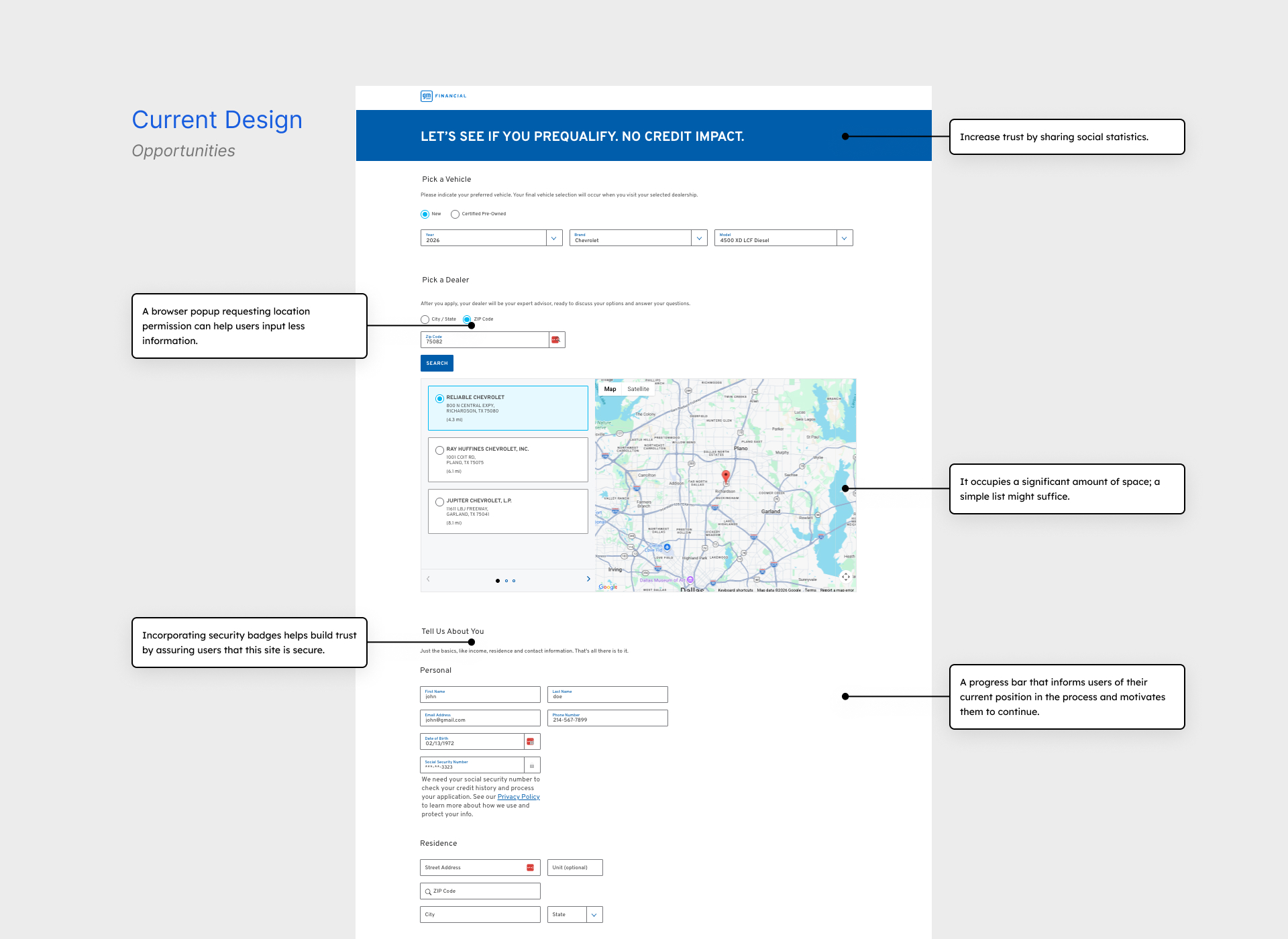
The existing experience presented users with a long single-page application, and analytics showed users frequently hesitated or dropped off midway through the form. Traffic analysis also showed that most applicants were entering from desktop (~65%), suggesting users were intentionally sitting down to complete the application rather than casually browsing on mobile.
How might we make the pre-qualification application feel faster and less overwhelming so more applicants complete the process?
Research & Hypothesis
We began by reviewing analytics to identify drop-off points in the existing application and understand device usage patterns. We also conducted usability testing with potential applicants and analyzed application flows across insurance, tax, and financial products.
During this review, we observed that companies like GEICO and TurboTax used guided, step-by-step experiences to simplify complex forms by asking users one question at a time.
Based on these insights, we formed the hypothesis that converting the single-page application into a guided multi-step flow could reduce perceived complexity and increase completion rates.
Design Approach
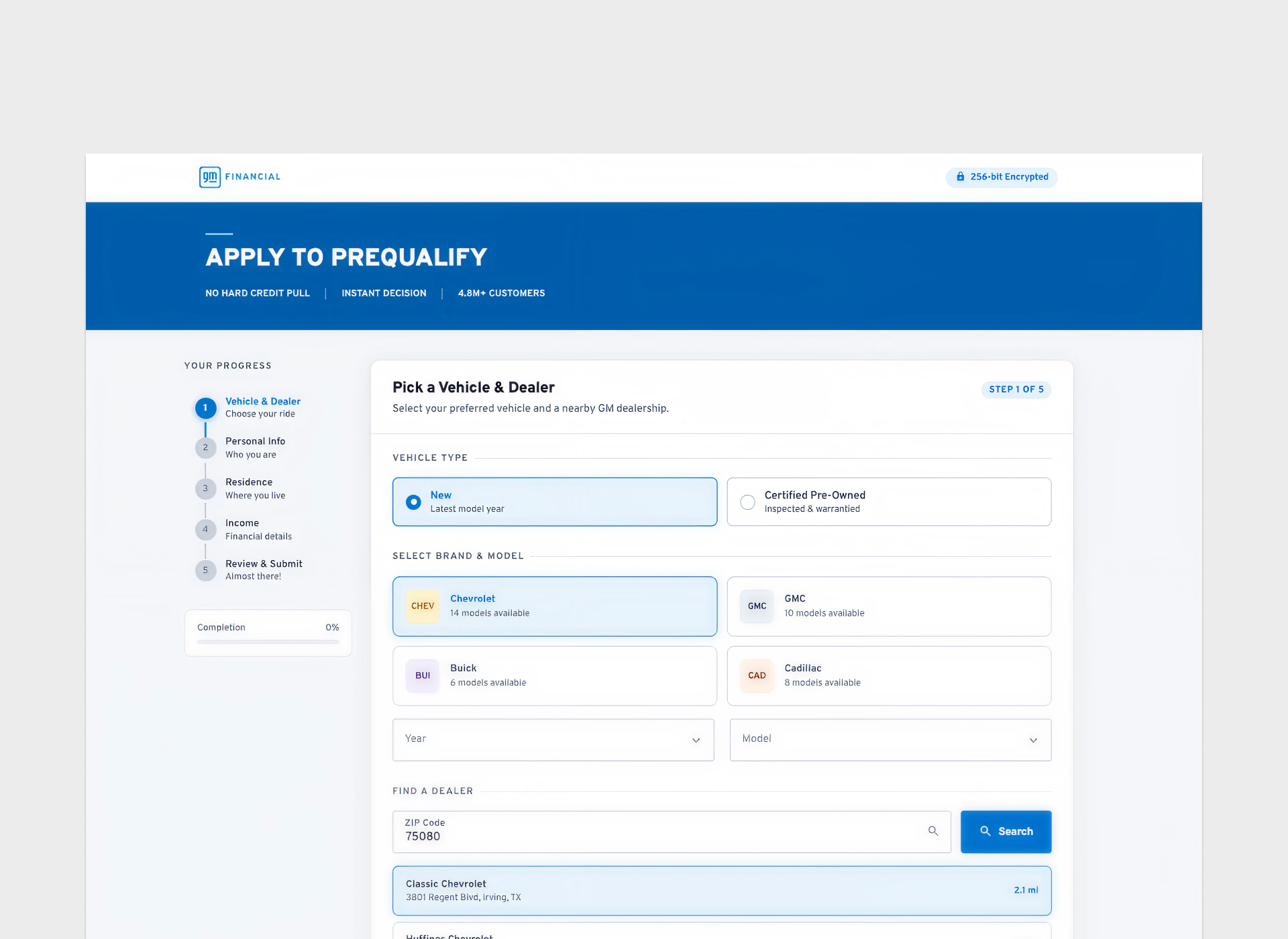
The redesigned experience focused on reducing perceived effort and guiding users through the application.
Key changes included:
Converting the form into a multi-step guided flow
Grouping related questions into smaller sections
Adding progress indicators
Improving layout and readability for both desktop and mobile
Providing short explanations around sensitive inputs such as income and credit checks
Experiment & Results
The redesigned flow was released as an A/B test against the original experience and monitored over approximately 8–10 weeks.
During the testing period we observed:
+12% increase in time spent in the application
+9% increase in field interaction
−7% decrease in completion rate
+11% increase in mid-flow drop-off
While users were interacting more with the guided flow, the additional steps appeared to introduce friction for applicants who were already highly motivated to complete the process quickly.
Results were shared through weekly analytics reviews, and after evaluating performance the SVP of Digital decided to revert to the original experience.
Outcome & Learnings
After the testing period, the redesigned experience did not outperform the original application and the team decided to revert to the previous design. While the new flow increased interaction with individual fields, the additional steps introduced friction that reduced overall completion.
The experiment reinforced that in high-intent financial applications, speed and efficiency often matter more than guided experiences. Breaking forms into multiple steps can increase perceived effort, and patterns that work well in other industries don’t always translate directly to financial products. Running the A/B test allowed the team to validate the concept quickly and make a data-driven decision.
Privacy Settings
We use cookies to enhance your experience while using our website. If you are using our Services via a browser you can restrict, block or remove cookies through your web browser settings. We also use content and scripts from third parties that may use tracking technologies. You can selectively provide your consent below to allow such third party embeds. For complete information about the cookies we use, data we collect and how we process them, please check our Privacy Policy