
Neighborly App
Outcome
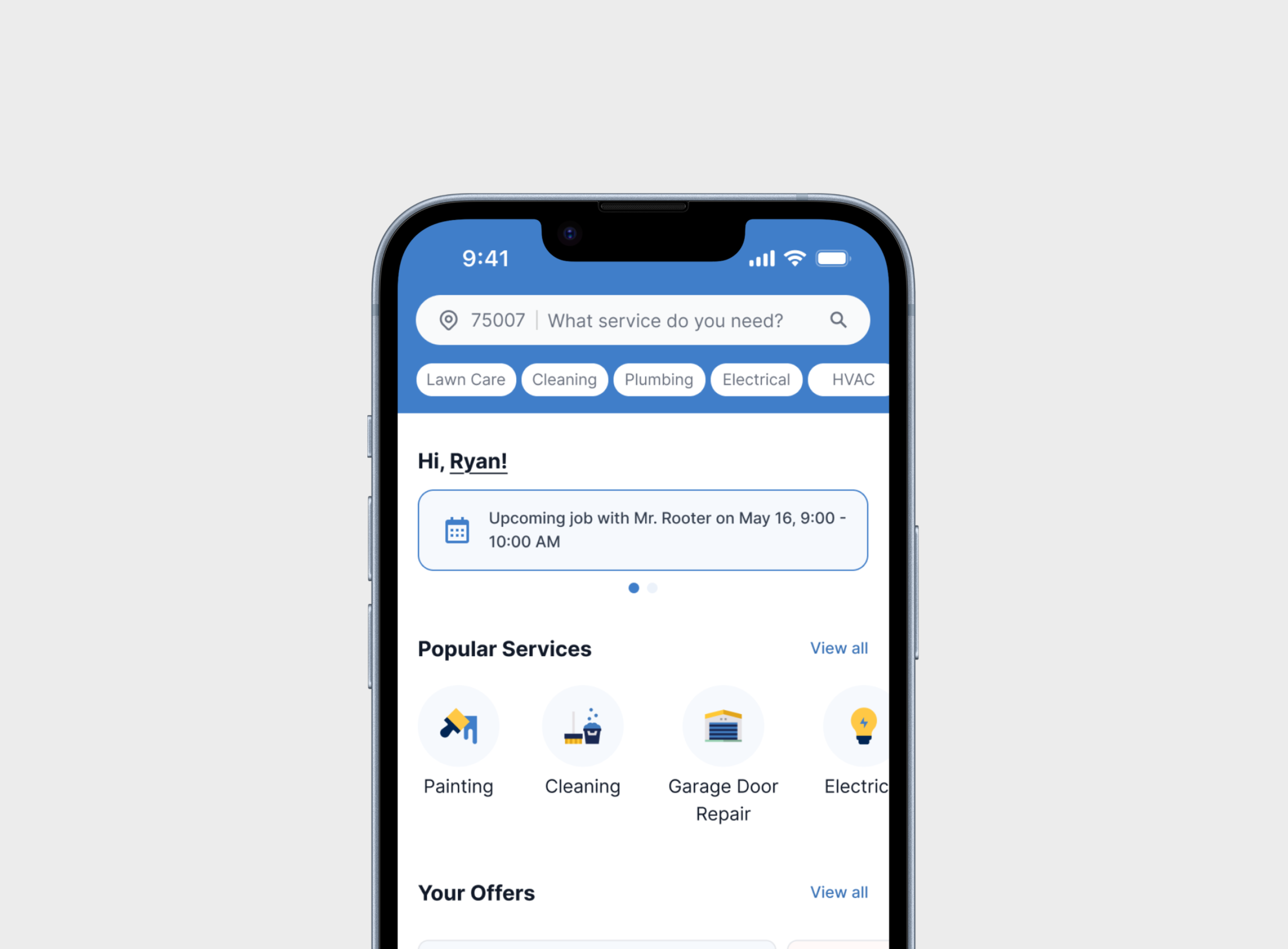
By redesigning onboarding, homepage, and service discovery, we created a clearer, more personalized starting experience intended to reduce early friction, improve service understanding, and set the foundation for stronger engagement and retention.
Context
Neighborly identified an opportunity to strengthen its mobile app as an early engagement channel. While the app supported multiple home service brands, users struggled to understand available services and see value quickly—leading to friction and drop-off early in the journey.
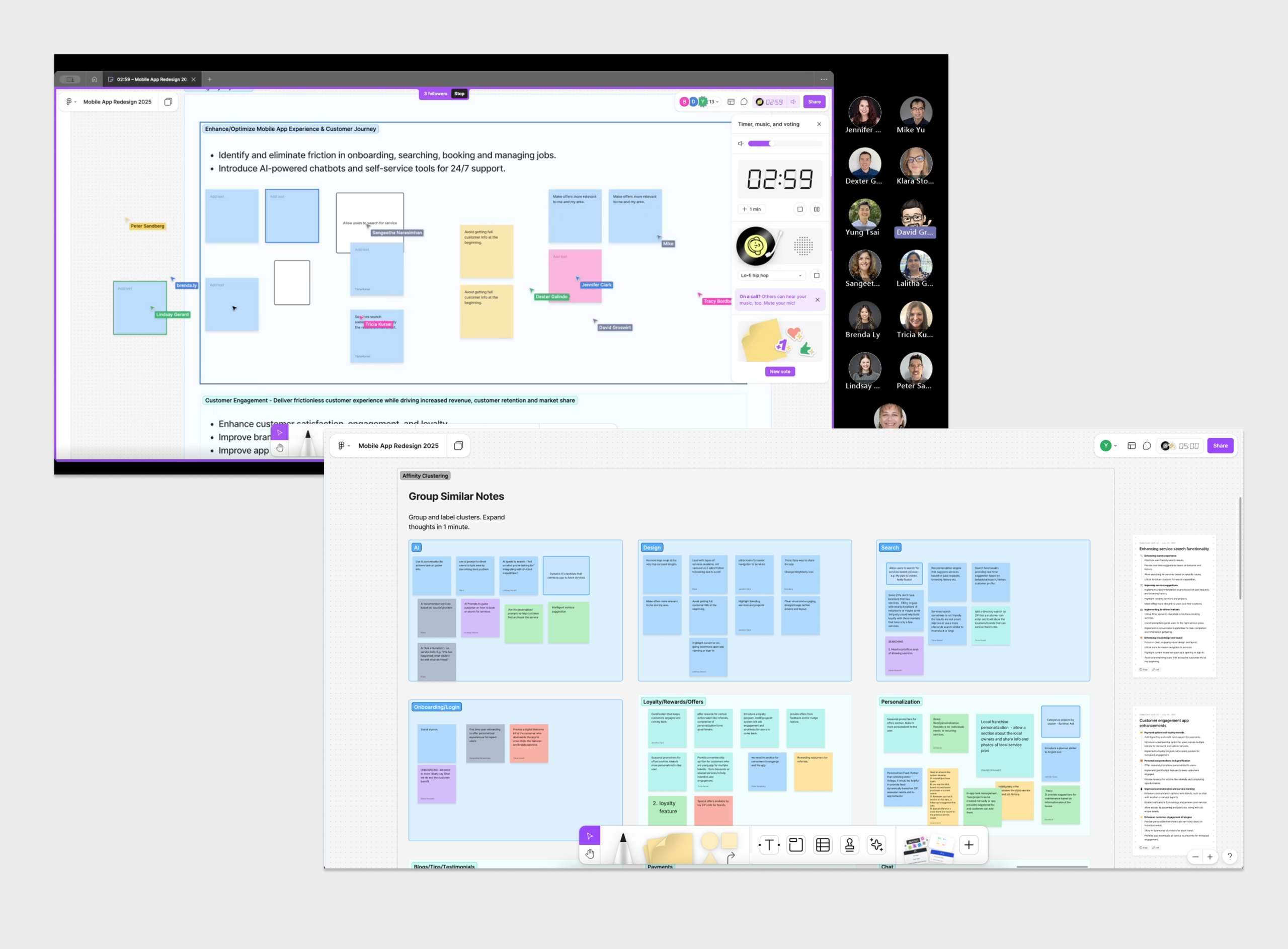
To move quickly, the team reviewed existing research, analytics, and customer feedback, then partnered with Product and Marketing to align on goals and constraints. These insights guided user flows and iterative design explorations focused on onboarding, service discovery, and helping users take action sooner.
Account & Onboarding
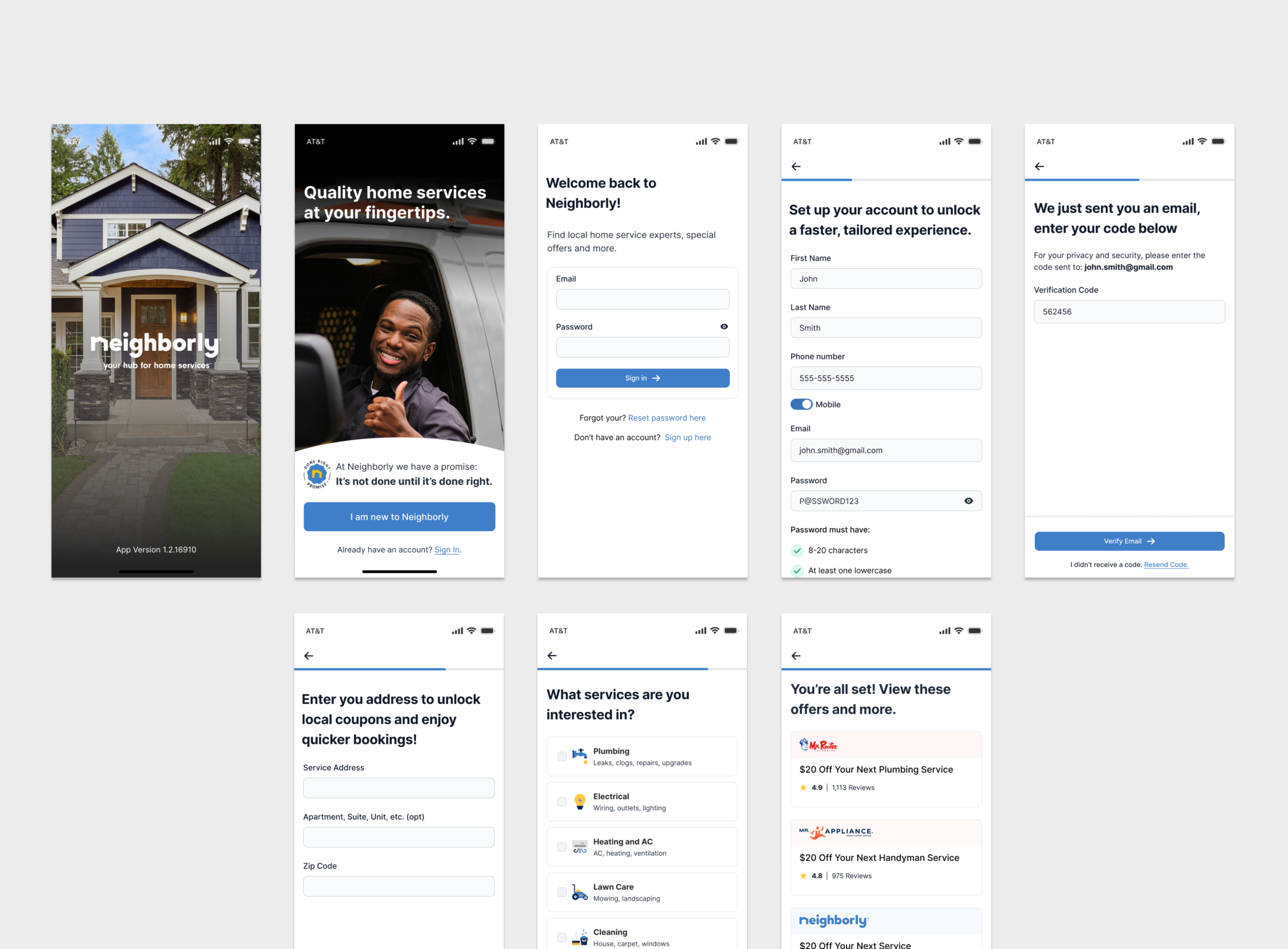
The app previously had no formal onboarding experience. We introduced a guided onboarding flow focused on increasing account creation while collecting key user intent. As an incentive, users who completed onboarding received a $20 service offer, framed as a reward rather than a requirement. Onboarding was optional—users could skip at any time—and the offer remained accessible on the homepage.
A new step asked users which services they were interested in. This data powered a personalized homepage that highlighted relevant services available in the user’s ZIP code, along with related upsell and cross-sell options. This allowed the experience to adapt based on user intent while creating clearer paths to engagement.
Improving Service Discovery
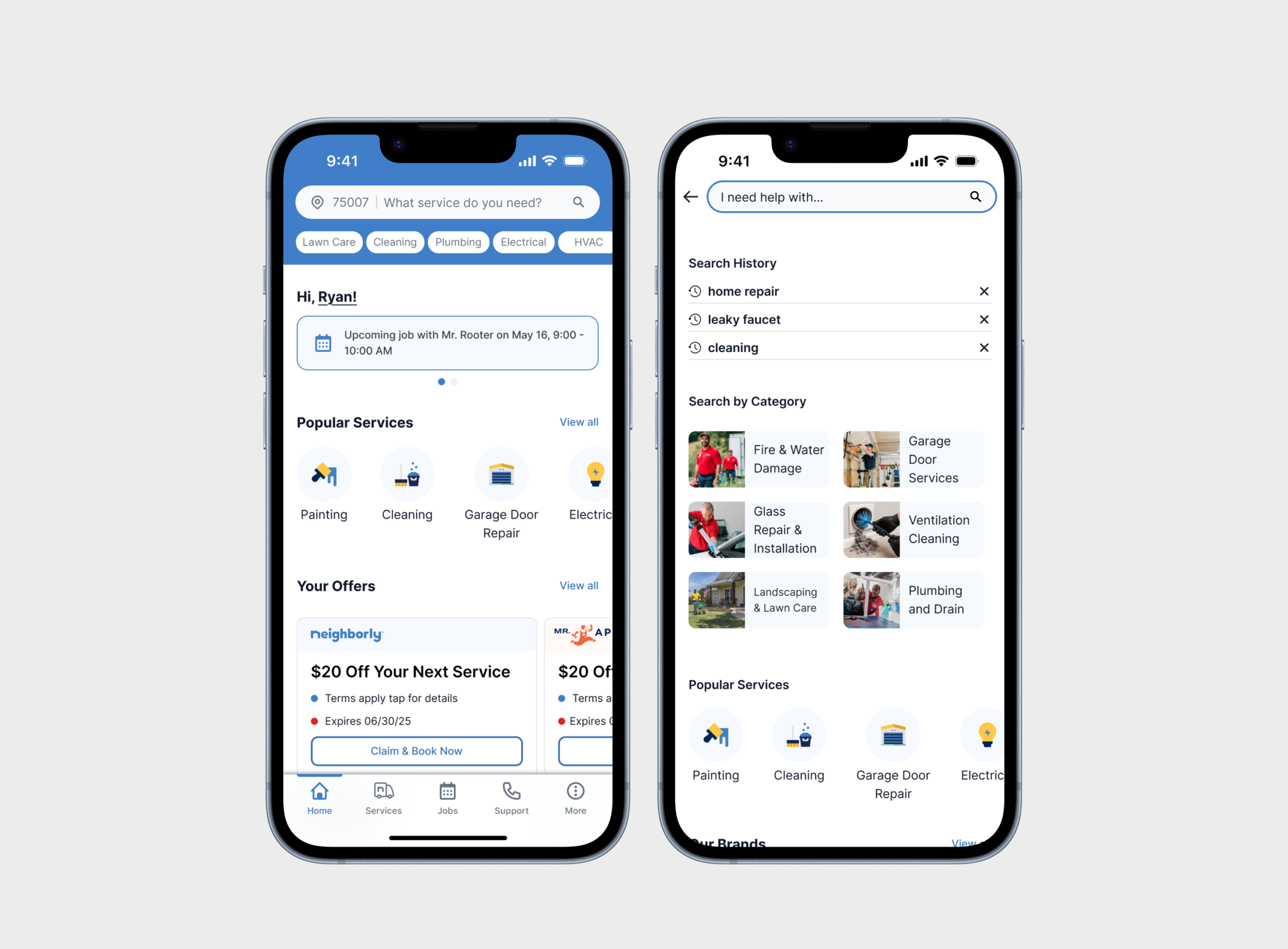
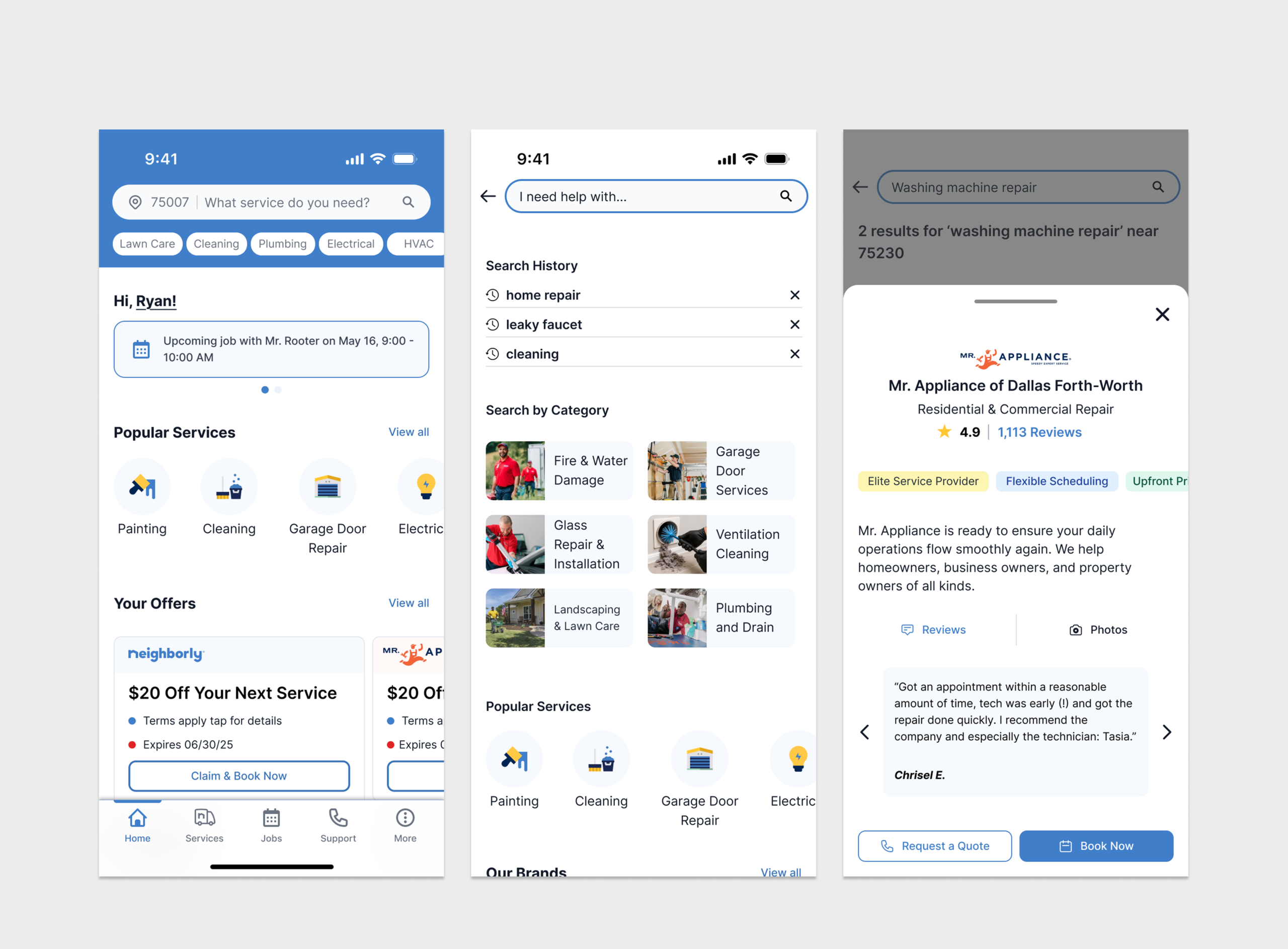
The homepage was redesigned to make it easier for users to quickly understand what services were available and where to start. Previously, the experience relied heavily on text and generic service listings, which made it harder for users to scan and identify relevant services.
The updated homepage prioritizes visual discovery, using clearer service photography and contextual offers to highlight popular services and seasonal needs. By pairing imagery with offers and promotions, the homepage helps users quickly recognize services they may need and encourages faster action. These changes aim to reduce friction for first-time users and make the app feel more intuitive and engaging from the moment it opens.
Turning Results Into Confidence
Search was redesigned to function as a primary entry point for users who already have a specific need in mind. Previously, search results lacked visual context and provided limited information, making it harder for users to evaluate options.
The updated search experience introduces visual search results, including service images and recently searched services to help users quickly recognize relevant options. Selecting a brand card now surfaces richer information such as reviews, ratings, photos, and customer testimonials. These improvements help users make more confident decisions and reach the right service faster.
Progress & Next Steps
Future iterations of the app will continue to build on the foundational work around onboarding, homepage clarity, and service discovery. As improvements roll out incrementally, the focus will be on validating assumptions through usage data and customer feedback, then refining flows that help users find relevant services and take action with less friction.
Additional opportunities include further personalization based on location and behavior, improving search relevance and results, and expanding self-service capabilities to better support repeat and multi-service customers. These next steps aim to strengthen early engagement while creating a flexible foundation for ongoing enhancements as the product evolves.